PhD Student @ IIT Bombay • Scientist @ ISRO

Hi, I'm Aminur Hossain

|

I develop advanced deep learning and computer vision methods for remote sensing applications. My work spans generative AI, multi-modal models, and quantum-classical hybrid architectures.
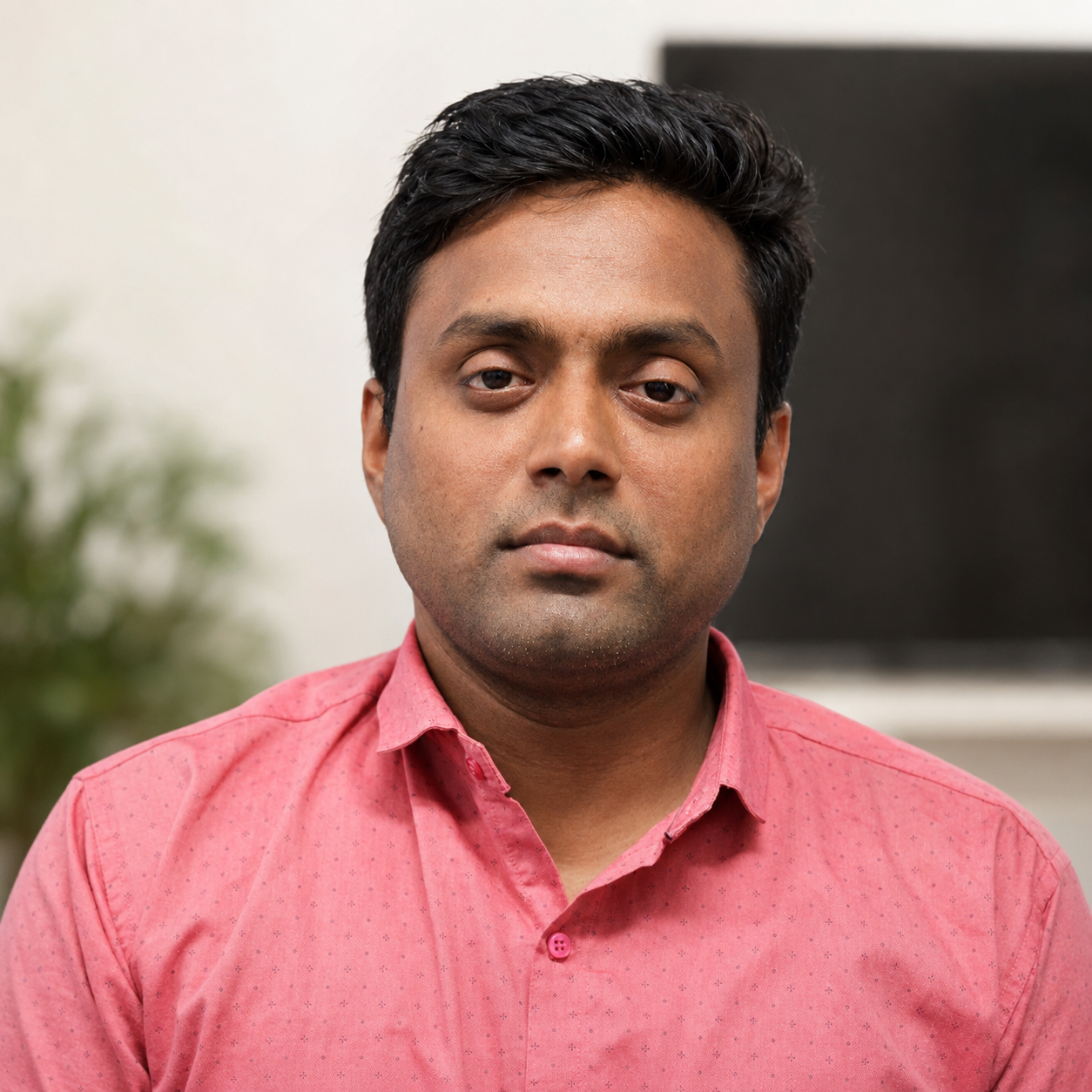
Aminur Hossain

About Me

Researcher, scientist, and lifelong learner

My Story

I'm a PhD student at CSRE, IIT Bombay, advised by Prof. Biplab Banerjee and co-supervised by Dr. Nitant Dube of SAC, ISRO. My research focuses on Deep Learning, Computer Vision for Remote Sensing, Generative AI, and Multi-Modal Models for Remote Sensing applications.

I am passionate about leveraging advanced machine learning models to solve complex problems in remote sensing and related fields. I also enjoy sharing knowledge through teaching and writing about data science and mathematics.

Currently, I am working as a Scientist-SE at the Space Applications Centre, ISRO, Ahmedabad, India.

13+ Publications
4 Research Areas
7+ Top Venues

Research Expertise

Programming

Python MATLAB R C Git LaTeX

AI & Deep Learning

PyTorch TensorFlow Keras QML PennyLane Scikit-Learn NumPy & Pandas

Remote Sensing

GDAL Rasterio HDF5 Optical Data Processing Radiometric & Geometric Calibration

HPC & Infrastructure

SLURM NVIDIA CUDA (Multi-GPU) SQL High-Res Data Pipelines

Highlights

Recent paper acceptances, preprints, and research milestones

2026 Accepted

Spatial-Frequency Gated Swin Transformer accepted at ECCV

Cross-sensor remote sensing super-resolution research accepted at the TerraBytes II workshop.

Read preprint
2026 Accepted

HQ-UNet accepted at IEEE IGARSS

Hybrid quantum-classical U-Net with a quantum bottleneck for remote sensing image segmentation.

Read preprint
2026 Published

GeoMeld published at CVPR Workshop

Semantically grounded foundation models for remote sensing through multi-modal representation learning.

Read preprint
2026 Accepted

QMC-Net accepted at ICPR

Data-aware quantum representations for remote sensing image classification.

Find paper
2026 Preprint

HQ-JEPA released on arXiv

Hybrid quantum joint-embedding predictive architecture for cross-modal remote sensing representation learning.

Read preprint

Research Highlights

Key focus areas driving my academic work

Core Research

Deep Learning for Remote Sensing

Novel architectures for satellite image segmentation, classification, super-resolution, and retrieval tasks.

PyTorch Transformers CNNs Attention
Generative AI

Generative AI & Multi-Modal Models

Cross-modal representation learning, joint-embedding predictive architectures, and foundation models for remote sensing.

GANs JEPA CLIP Foundation Models
Quantum ML

Quantum-Classical Hybrid Networks

Hybrid quantum-classical architectures (HQ-UNet, HQF-Net, QMC-Net) for image segmentation and classification.

Qiskit PennyLane Quantum Circuits
Computer Vision

Computer Vision & Image Processing

Noise removal, infrared object detection and tracking, and hyperspectral classification with frequency-domain analysis.

OpenCV Detection Tracking HSI

My Journey

Academic and professional milestones

Aug 2024 - Present

PhD in Computer Vision and Machine Learning

Centre of Studies in Resources Engineering (CSRE), IIT Bombay

PhD Scholar ISRO Scientist

Pursuing doctoral research and coursework concurrently with professional responsibilities as a Scientist at ISRO.

Current CGPA 9.62 / 10.0
Focus Areas
Multi-Modal Models Quantum Machine Learning Remote Sensing
March 2017 - Present

Scientist/Engineer-SE

Space Applications Centre, ISRO — Ahmedabad

Focuses on high-resolution satellite data processing, mathematical modeling, and ML/DL applications for Earth imaging. Responsibilities include data calibration, geometric correction, image radiometric correction, and developing operational processing software chains. Contributed to the Cartosat-1, Cartosat-2, and Cartosat-3 satellite series, HRSAT, and Moon mission satellite projects.

June 2015 - Feb 2017

Junior Research Fellow (JRF)

Department of Mathematics, IIT Kharagpur

Conducted mathematical research in Applied Linear Algebra and Quantum Computing. Transitioned directly to a Scientist position at ISRO via the centralized national recruitment selection.

2013 - 2015

MSc in Mathematics

Indian Institute of Technology (IIT) Kharagpur

Completed post-graduation in Mathematics with a final CGPA of 8.73/10.0. Developed deep theoretical foundations in algebra, analysis, and statistics.

2010 - 2013

BSc (Hons.) in Mathematics

Barasat Government College, West Bengal State University

Graduated with 76.88% marks in Mathematics Hons, building solid analytical and mathematical foundations.

Academic Achievements

Successfully qualified prestigious national-level examinations in Mathematics, including IIT JAM, CSIR-UGC NET, GATE, and MANF JRF.

Publications

Published, accepted, and under-review research in remote sensing, computer vision, and quantum computing

2026
Accepted

Spatial-Frequency Gated Swin Transformer for Cross-Sensor Remote Sensing Super-Resolution

Md Aminur Hossain, Ayush V. Patel, Yogesh Jethani, Sanjay K. Singh, and Biplab Banerjee

TerraBytes II Workshop at ECCV 2026

Accepted

HQ-UNet: A Hybrid Quantum-Classical U-Net with a Quantum Bottleneck for Remote Sensing Image Segmentation

Md Aminur Hossain, Ayush V. Patel, Ikshwaku Vanani, and Biplab Banerjee

IEEE IGARSS 2026

Published

GeoMeld: Toward Semantically Grounded Foundation Models for Remote Sensing

Maram Hasan, Md Aminur Hossain, Savitra Roy, Souparna Bhowmik, Ayush V. Patel, Mainak Singha, Subhasis Chaudhuri, Muhammad Haris Khan, and Biplab Banerjee

CVPR Workshop 2026

Under Review

FairRSFM: A Biome-Aware Benchmark and Debiasing Framework for Remote Sensing Foundation Models

Md Aminur Hossain, Omkumar Vaghasiya, Rajeev Ranjan Dwivedi, Vinod K. Kurmi, and Biplab Banerjee

Conference submission

Under Review

CR-JEPA: Cross-Modal Joint-Embedding Predictive Learning for Remote Sensing Image Retrieval

Md Aminur Hossain, Ayush V. Patel, Nitant Dube, and Biplab Banerjee

Conference submission

Under Review

HQ-JEPA: Hybrid Quantum Joint-Embedding Predictive Architecture for Cross-Modal Remote Sensing Representation Learning

Md Aminur Hossain, Ayush V. Patel, Sanjay K. Singh, and Biplab Banerjee

Conference submission

Published

HQF-Net: A Hybrid Quantum-Classical Multi-Scale Fusion Network for Remote Sensing Image Segmentation

Md Aminur Hossain, Ayush V. Patel, Siddhant Gole, Sanjay K. Singh, and Biplab Banerjee

CVPR Workshop 2026

Accepted

QMC-Net: Data-aware Quantum Representations for Remote Sensing Image Classification

Md Aminur Hossain, Ayush V. Patel, and Biplab Banerjee

ICPR 2026

2025
Under Review

When Frequency Meets Context: Frequency-Aware Attention and Bidirectional State Transitions for Hyperspectral Image Classification

Amartya Ray, Md Aminur Hossain, and Biplab Banerjee

IEEE Transactions on Geoscience and Remote Sensing

Published

A Weighted ℓ1 Regularization Method for Stripe Noise Removal in Remote Sensing Images

Md Aminur Hossain, Amartya Ray, Ayush V. Patel, S. K. Singh, and Biplab Banerjee

IEEE ICCCA 2025

Published

Real-Time Infrared Object Detection and Multi-Object Tracking for Surveillance Applications

Md Aminur Hossain, Amartya Ray, Siddharth Gosawi, and Sanjay K. Singh

IEEE ICITEICS 2025

2023
Published

Band Reconstruction for High Resolution Satellite Images using Deep Learning

Md Aminur Hossain, Sanjay K. Singh, Arvind K. Singh, and Devakanth Naidu

43rd INCA International Congress

Published

Reconstruction of Missing Multiband Images for High Resolution Multispectral Sensors Using Wasserstein GANs

Md Aminur Hossain, Ashutosh Gupta, Subhajit Paul, Sanjay K. Singh, S. Devakanth Naidu, and Debajyoti Dhar

IEEE InGARSS 2023

Get In Touch

Let's discuss research collaborations or opportunities

Connect With Me

Feel free to reach out for research collaborations, academic discussions, or any queries about my work in remote sensing and deep learning.

Location Ahmedabad, India

Visitor Map

Total visits and approximate visitor locations by country

Locations are approximate. Visitor statistics are provided by Flag Counter.